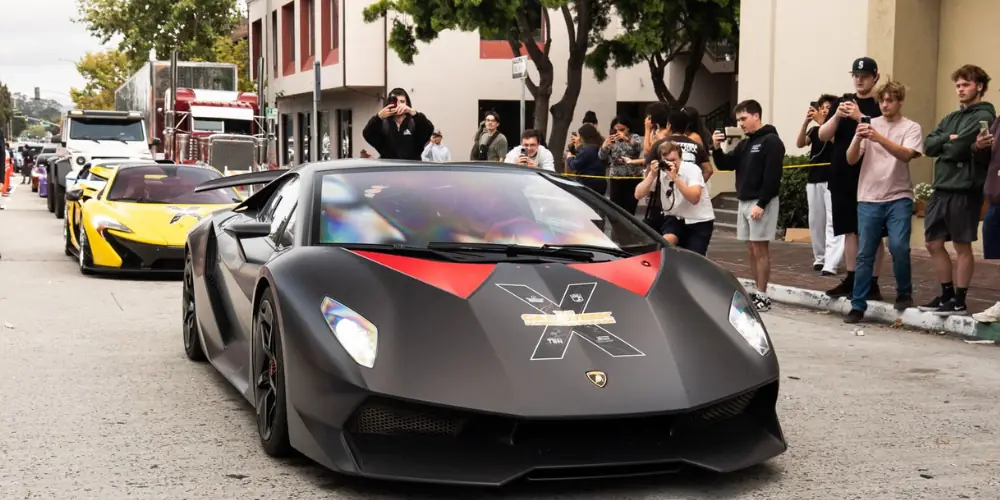
Monterey Car Week has become a useful snapshot of where the high-end automotive market is heading. The shift is visible not only in the cars being auctioned, but also in who is buying them, which brands are attracting attention, and what buyers now consider special.
Traditional classics still draw serious collectors, yet newer supercars, hypercars, limited-run models, and carefully rebuilt analog machines are taking a larger share of the spotlight.
A New Collector Crowd
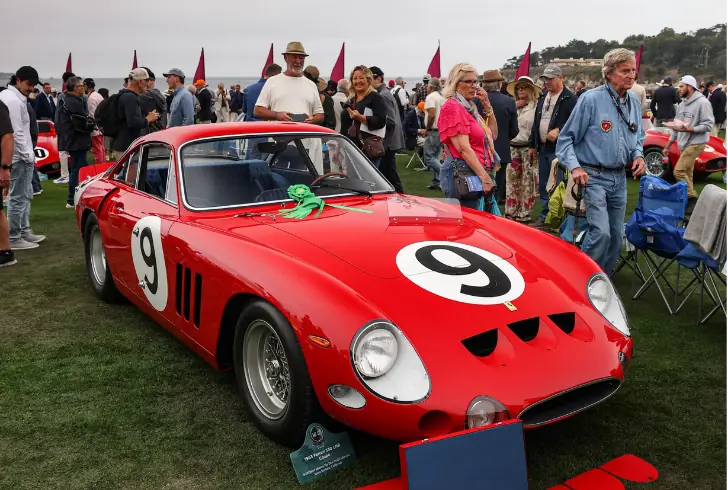
The change was easy to notice around Carmel and the famous 17-Mile Drive. When a Duesenberg SSJ once owned by Clark Gable won Best of Show at the Pebble Beach Concours d’Elegance, the event still attracted major collectors. However, the crowd looked different from the one associated with classic-car culture for decades.
Younger enthusiasts now play a much larger role. Instead of focusing mainly on prewar Duesenbergs and other historic cars, many gravitate toward brands such as Koenigsegg, Pagani, Czinger, Lamborghini, and other modern exotics.
Supercars can be seen around private events, luxury parties, and gatherings that cater to a younger generation of collectors and enthusiasts.
The cultural gap has even reached social media. AI-generated parody videos often contrast traditional “old money” collectors with younger influencers and exotic-car buyers. The distinction can be striking, especially when extremely wealthy owners choose rare Czingers while other enthusiasts arrive in Porsche 911 GT3s or current Lamborghinis.
Modern Cars Lead the Market
The numbers from the 2026 Monterey auctions reinforce that shift. According to Hagerty, total auction sales reached a record $755.6 million. Modern supercars accounted for more than half of the sales, while prewar automobiles continued to represent a smaller portion of the market.
Several modern classics have also experienced major price increases. Ferrari F40s and Enzos remain highly sought after, while less traditional choices are commanding remarkable sums. A 2010 Lamborghini Murciélago LP640, for example, sold for $3.1 million.
McKeel Hagerty, Chief Executive Officer and Chairman of the Board of Hagerty, said the market has been moving toward newer cars for several years. He described Monterey Car Week as the “Art Basel of car culture,” with the Pebble Beach Concours d’Elegance at its center.
Hagerty also pointed to the expanding number of luxury brands competing for collector attention. Ferrari remains a constant, but buyers now have far more choices from manufacturers and specialists including Bugatti, Koenigsegg, McLaren, Pagani, RUF, and Singer.
Ultra-Luxury Prices Feel Different
Victor Muller, CEO of Spyker, offered another view of how dramatically expectations have changed. Muller began producing hand-built Spyker cars in 2000. At the time, the company priced its cars at roughly $250,000, around 25% more than a comparable Ferrari. That figure seemed unusually high to many buyers.
Today, Spyker is offering the C8 Preliator XXV at about 1.6 million euros, or roughly $1.9 million. The price no longer seems shocking within the ultra-luxury market. By the end of Monterey Car Week, all 25 examples scheduled for production had been spoken for.
Muller summarized the shift simply: “Now we’re selling a 1.6 million euro car—let’s say $1.9 million dollars—and nobody finds it odd at all.”
That change also affects established luxury manufacturers. Major brands now treat Monterey Car Week as an important stage for expensive, low-volume products. Events such as The Quail have grown into major marketing opportunities, while traditional auto shows in Detroit, Los Angeles, and New York receive less attention from some luxury brands.
Audi and Cadillac Raise the Stakes
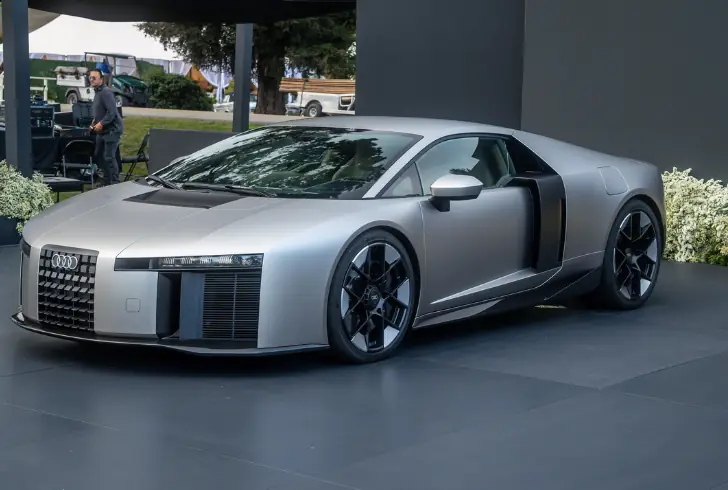
Audi brought its Nuvolari to The Quail, presenting a mid-engine plug-in supercar limited to 499 units and expected to cost about $700,000. Massimo Frascella, Audi’s Chief Creative Officer, said the model reflects the company’s focus on “clarity, technicality and intelligence.”
The details support that approach. The rear logo, for example, uses milled aluminum and sits flush within the upper rear body panel. Audi positioned the Nuvolari as a supercar with a different interpretation of performance and design.
Cadillac took a similarly ambitious direction. Its V-One concept appeared alongside the Audi display, signaling a possible move toward extremely limited production and a very high price. Dominic Najafi, Executive Director of Design, Global Cadillac, said the V-One combines racing credibility with ultra-luxury design.
“I think we surprised people with the V-One,” Najafi said, pointing to its materials and technology. He added that technology has long been an important part of American design and described Cadillac’s goal as defining “American luxury.”
The Cadillac CELESTIQ also received attention during the week. The electric luxury sedan, with an as-driven price of around $500,000, combines strong electric acceleration with rear-wheel steering. That combination gives the large vehicle greater agility through tighter corners.
Why Analog Cars Are Gaining Attention
With brands from the Volkswagen Group and General Motors pushing toward higher prices, greater exclusivity, and lower production numbers, another question emerges: what can still feel unusual?
One answer is surprisingly old-fashioned technology.
Spyker’s C8 Preliator XXV offers a manual gearbox and avoids the digital screens found in most modern performance cars. Its mechanical character stands apart in an industry that has spent years chasing faster acceleration times, electronic assistance, and increasingly sophisticated interfaces.
Muller said the company continued producing manual gearboxes even when the industry questioned their relevance. “Fifteen years ago, everybody said F1 technology is the future, right?” he said. “Now the manual gearbox is back in fashion.”
That change reflects a broader interest in driving experiences that cannot be reduced to performance figures. For some buyers, the physical interaction with a clutch, gear lever, steering wheel, and engine has become part of the value.
The Return of Lamborghini Diablo
The Eccentrica roadster offered another interpretation of this analog revival. Created by a resto-mod company based in San Marino, the car uses first-series Lamborghini Diablos as its foundation.
The original Diablo shape remains recognizable, but Eccentrica updates the materials, construction, and mechanical components. Emanuel Colombini, the company’s founder and president, brought former Lamborghini engineer Maurizio Reggiani on board as an advisor. Reggiani retired from Lamborghini in 2023 after a long career with the manufacturer.
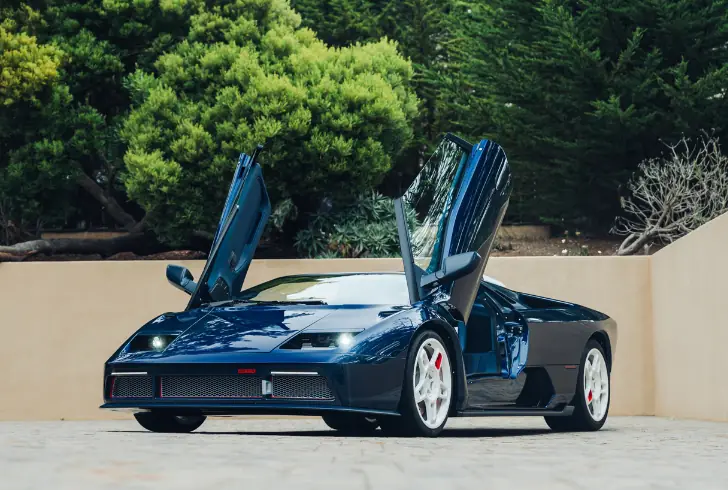
The goal is not to turn an old Diablo into a completely modern vehicle. Instead, the project seeks to preserve the original character while addressing some of its limitations.
“The idea is to have an analog car you can drive every day,” Colombini said. “The old car was a bit of a handful, a bull, no?”
Reggiani explained the philosophy behind the project in equally direct terms: “Our target was to improve what was not available in the ‘90s, and leaving the same DNA of the car.” He added, “It cannot just be the car of today, otherwise what’s the point?”
That distinction matters. A resto-mod can succeed by improving usability without erasing the qualities that made the original vehicle desirable.
Younger Buyers Are Redefining Collecting
Younger collectors are showing stronger interest in cars from the 1990s, 2000s, and newer eras. Limited production, distinctive engineering, manual transmissions, and unusual design can carry as much weight as traditional historical value. That shift has helped bring modern supercars, hypercars, and resto-mods deeper into collector culture.
Monterey Car Week now brings several generations of automotive taste into one setting. A historic Duesenberg can appear alongside a $700,000 Audi, a $500,000 Cadillac CELESTIQ, or a Diablo-based Eccentrica roadster. The contrast shows how broadly the definition of a collectible car has expanded.
Modern buyers are not simply replacing classic-car collectors. Instead, they are adding new categories to the market. Some seek advanced performance and rare production numbers, while others are returning to manual controls and mechanical simplicity.
That mix gives the luxury-car market a wider range of possibilities. The cars gaining attention are no longer defined solely by age or heritage, but by the experience, engineering, and character they bring to their owners.